
Your shopping cart is empty!
Categories
- 3D Printing and Plastic peripherals (8)
- 433Mhz and Lora (8)
- Support (2)
-
Amateur Radio (665)
- - Antenna Analyzer (12)
- - APRS (12)
- - ATU (5)
- - CW (1)
- - Digital Modes (9)
- - DMR (4)
- - Echolink (10)
- - Enclosure (14)
- - Eshail-2 (QO-100) (67)
- - GPS (9)
- - iGate (1)
- - Microcontrollers (43)
- - Microphone (1)
- - Power Supply (7)
- - Programming Cable (6)
- - QRP (9)
- - Radio interface (25)
- - Receiver (11)
- - Repeater (4)
- - RF Amplifiers (20)
- - RF Kits (20)
- - RF modules (118)
- - Rotator (1)
- - SDR (77)
- - Spectrum Analyzer (4)
- - SWR (9)
- - Transceiver (60)
- - WSPR (5)
- Antennas and Acc (322)
- Audio and Video (28)
- Aviation (4)
- Bargain Box (1)
- Battery (3)
- Bluetooth (11)
- Cables (37)
- Computer Peripherals (104)
- Connectors (93)
- Data acquisition (1)
- Display (2)
- Electromechanical (26)
- Enclosure (13)
- GPS (7)
- Hardware (4)
- Home Automation (128)
- Inverter (9)
- Liquid (7)
- Lora (8)
- Microcontrollers (121)
- Modbus (3)
- MQTT (14)
- Network Radio (3)
- Networking (9)
- Power (135)
- Power supply (49)
- Radio Interface (21)
- RF Modules (144)
- ROIP (6)
- Satellite (95)
- Security (13)
- Sensor (17)
- Solar (14)
- Test and Measurements (66)
- Tools and Equipment (8)
- Tracking (4)
- VOIP (14)
- Weather (1)
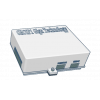
GPACKET Packet radio TNC, DIGIPEATER,IGATE and APRS with Isolation and PTT


Product Code: GPACKET
Availability: 2
Availability: 2
Price: R2,084.89
Ex Tax: R1,812.95
Ex Tax: R1,812.95
Qty:
- OR -
Add to Wish List
Add to Compare
Add to Compare

GPACKET
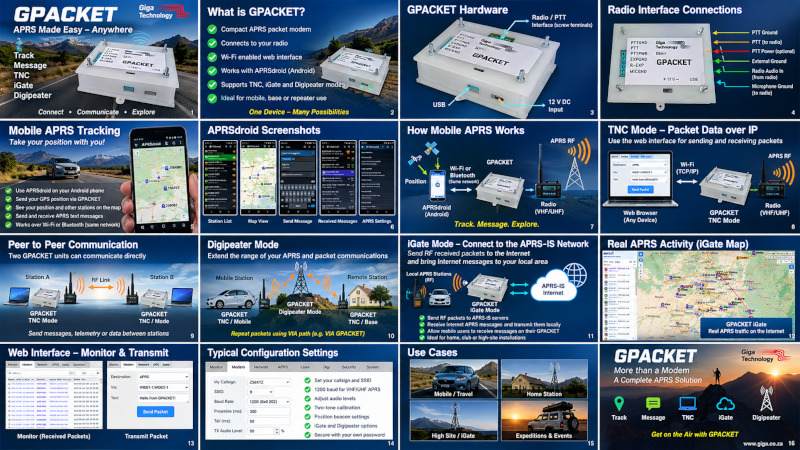
Packet radio is a digital communication method that splits computer data into small chunks, called packets, and sends them over radio waves. It uses a device called a Terminal Node Controller (TNC) instead of a telephone modem to connect a computer or smartphone to a radio.
A digipeater (short for "digital repeater") is an amateur radio station that receives digital data packets, stores them briefly in memory, and retransmits them on the same frequency. They are primarily used in the Automatic Packet Reporting System (APRS) to extend the range of moving vehicles, weather stations, and text messages far beyond basic line-of-sight limits.
APRS is a very useful amateur-radio digital system, and despite the name Automatic Packet Reporting System, it is used for much more than just position reporting.
At its simplest, APRS lets radio stations send short packets of digital information over radio, usually containing things like position, callsign, status, telemetry, messages, weather information, or object locations.
Common Uses and Setup APRS Tracking: Used globally to map vehicle locations, telemetry, and weather data.Satellites: Space-based amateur radio linear or packet digipeaters relay signals across continents.Emergency Communications: Portable or solar setups are deployed quickly during crises when regular communication infrastructure fails.Basic Hardware: Typically built using a VHF/UHF transceiver connected to a Terminal Node Controller (TNC) or a computer interface like a Raspberry Pi running software such as Dire Wolf
Basic APRS system
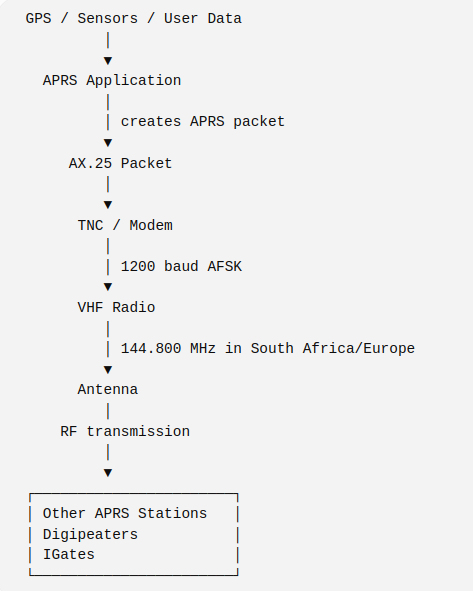
South Africa, 144.800 MHz is the commonly used VHF APRS frequency.
APRS is not only GPS
APRS can carry many different types of information.
For example:
- POSITION
- Latitude
- Longitude
- Altitude
- Course
- Speed
- TELEMETRY
- Battery voltage
- Temperature
- Current
- Solar voltage
- RSSI
- Sensor readings
- WEATHER
- Temperature
- Wind speed
- Wind direction
- Pressure
- Rainfall
- MESSAGES
- Short text messages
- STATUS
- Station information
- OBJECTS
- Repeaters
- Events
- Hazards
- Balloon locations
- Satellites
APRS telemetry
For something like a CubeSat or remote sensor, APRS can send telemetry values.
For example: T#001,12.4,0.72,24.3,5.01,3.31,00000000
The values could represent:
- Channel 1 = Battery voltage
- Channel 2 = Battery current
- Channel 3 = Temperature
- Channel 4 = 5 V rail
- Channel 5 = 3.3 V rail
There are also APRS messages that describe what each telemetry channel means.
So a ground station can convert the raw numbers into meaningful engineering values.
APRS via satellite
APRS can also operate through amateur satellites.
The concept becomes:
SATELLITE
APRS Digipeater
/ \
/ \
/ \
/ \
▼ ▼
Station A Station B
ZR6XXX ZSxxxx
A ground station transmits an APRS packet toward the satellite.
The satellite receives it.
The satellite's digipeater retransmits the packet.
Other ground stations then receive it.
Satellite APRS frequencies depend on the particular satellite, so you shouldn't assume 144.800 MHz for the satellite link.
APRS GPACKET TNC
GPS (VIA Bluetooth Android Phone)
│
▼
GPACKET
│
├─ APRS formatting
├─ AX.25 framing
├─ CRC
├─ bit stuffing
├─ NRZI
└─ AFSK generation
│
▼
Radio transmitter (HF ,VHF and UHF frequencies)
APRS versus ordinary packet radio
An important conceptual difference is that APRS is generally broadcast-oriented.
It isn't normally:
- Connect to station
- Transfer file
- Disconnect
Instead it is closer to:
- "Here I am."
- "Here is my telemetry."
- "Here is my status."
- "Here is a short message."
Many stations can receive that packet simultaneously via GPACKET
That's why it works particularly well for tracking, telemetry, weather stations, balloons, vehicles and satellites.
The complete picture
You can think of APRS as several layers:
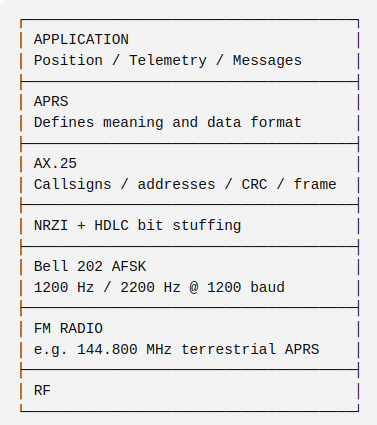
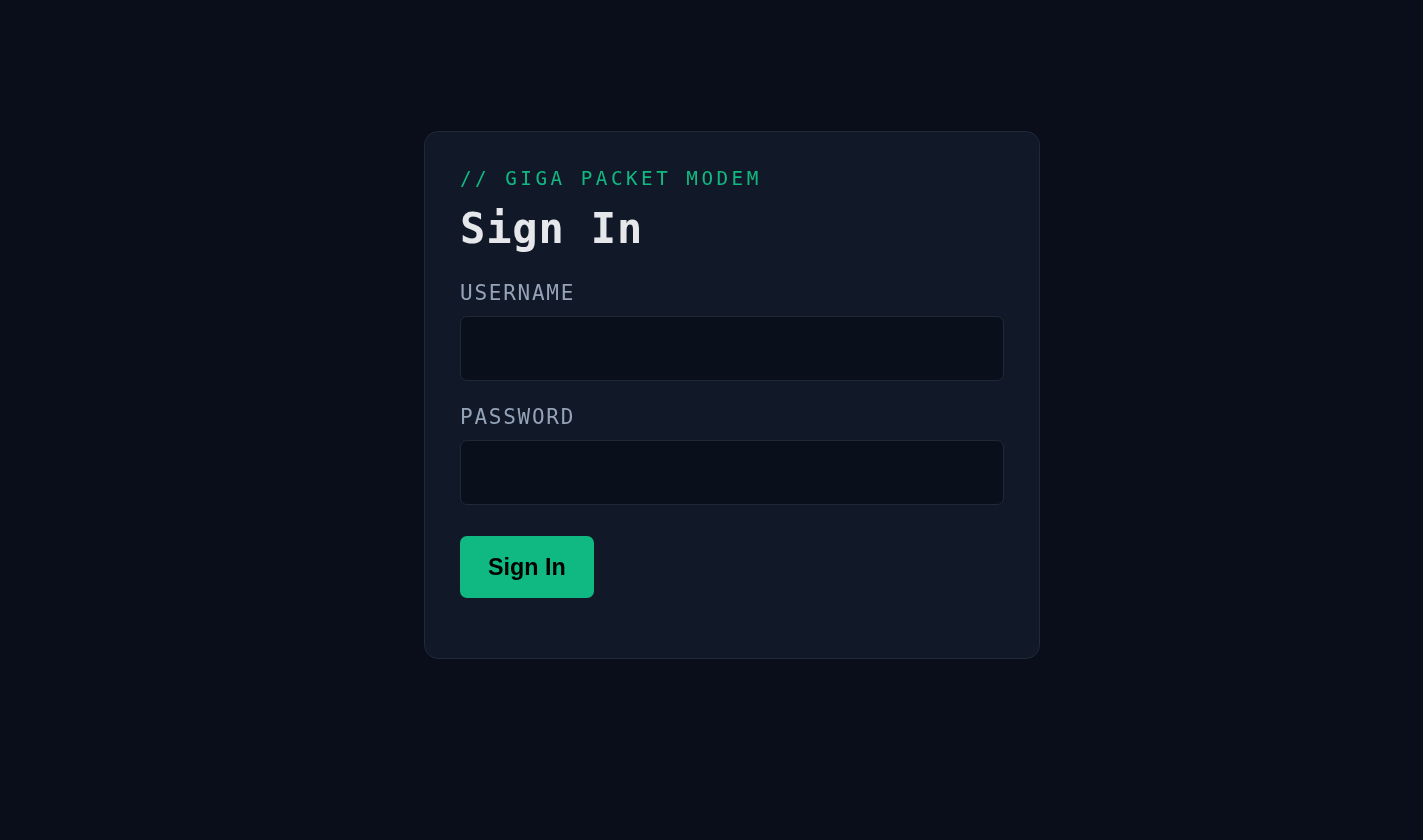
GPACKET Configuration screens
Login Screen
Radio Audio level monitoring
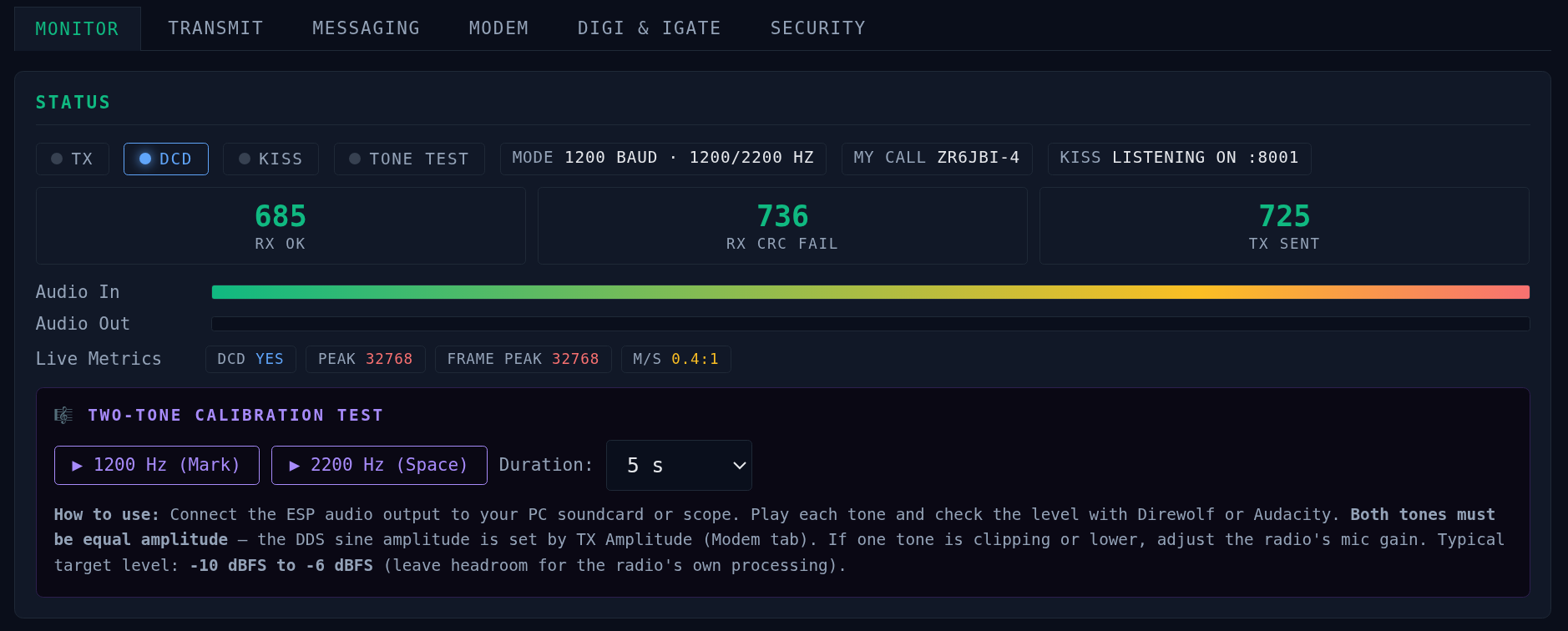
Monitoring 2
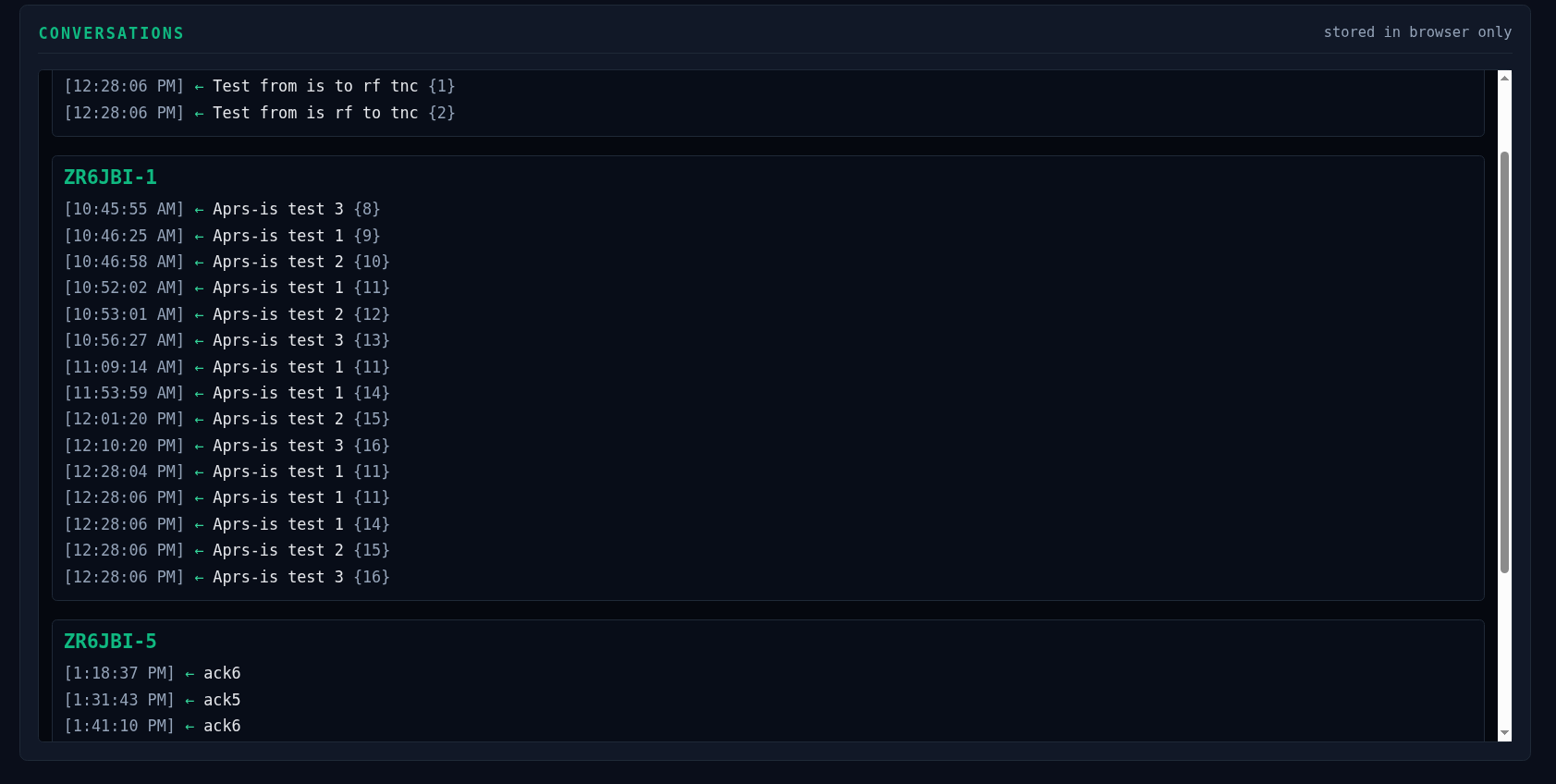
Monitoring 3
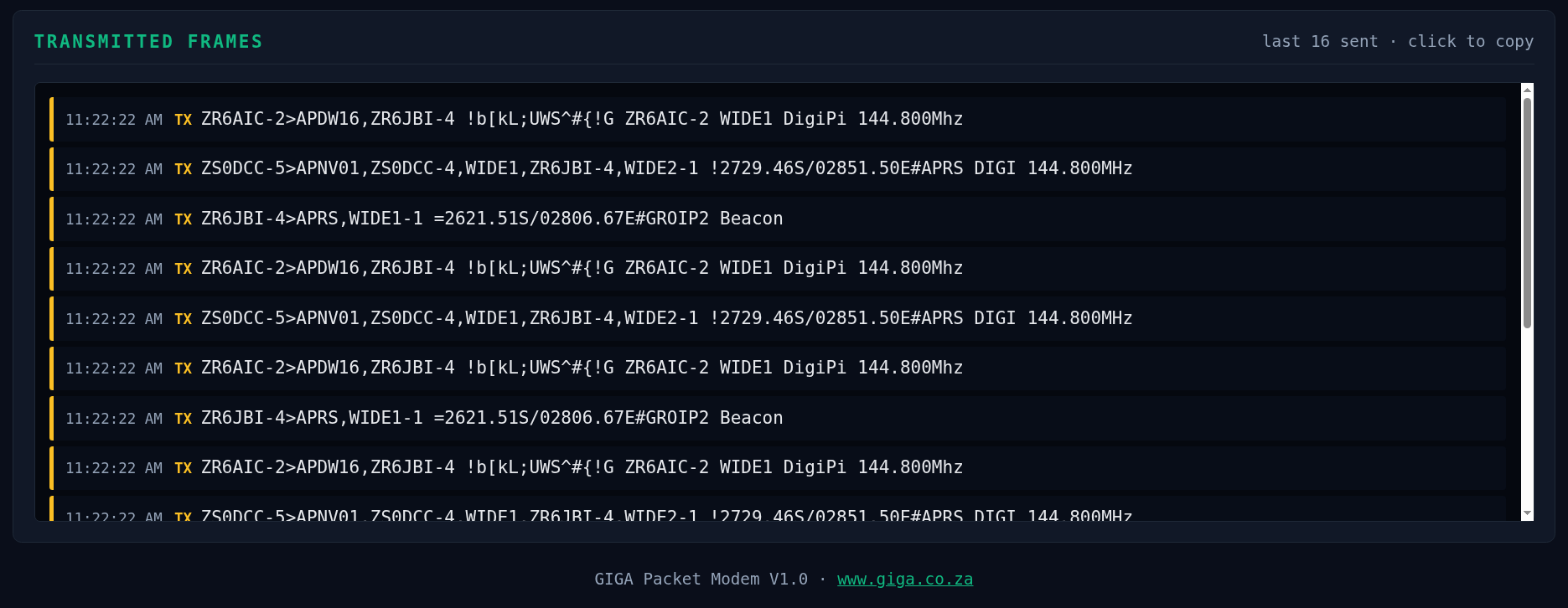
Digital IGATE1
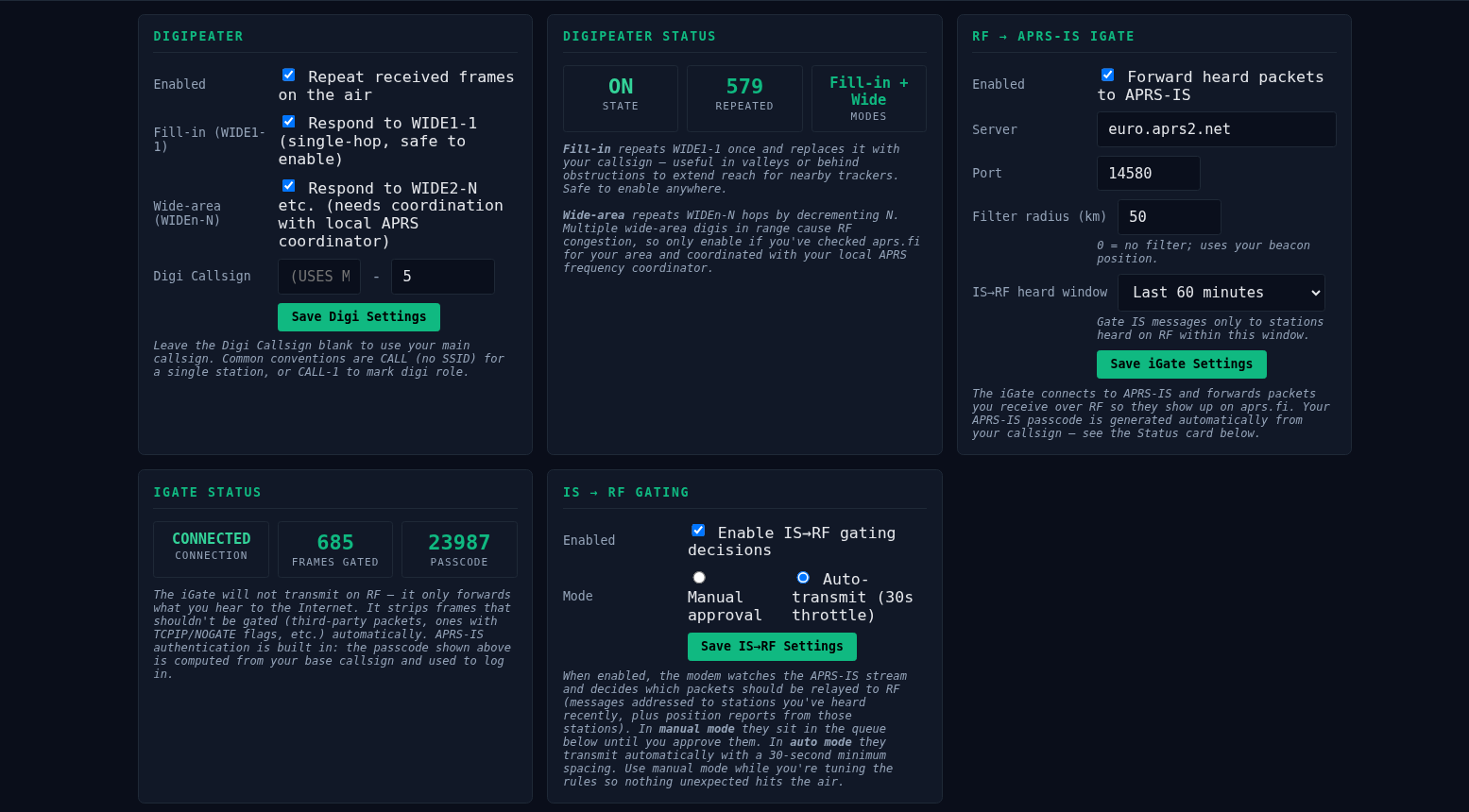
Digital IGATE 2
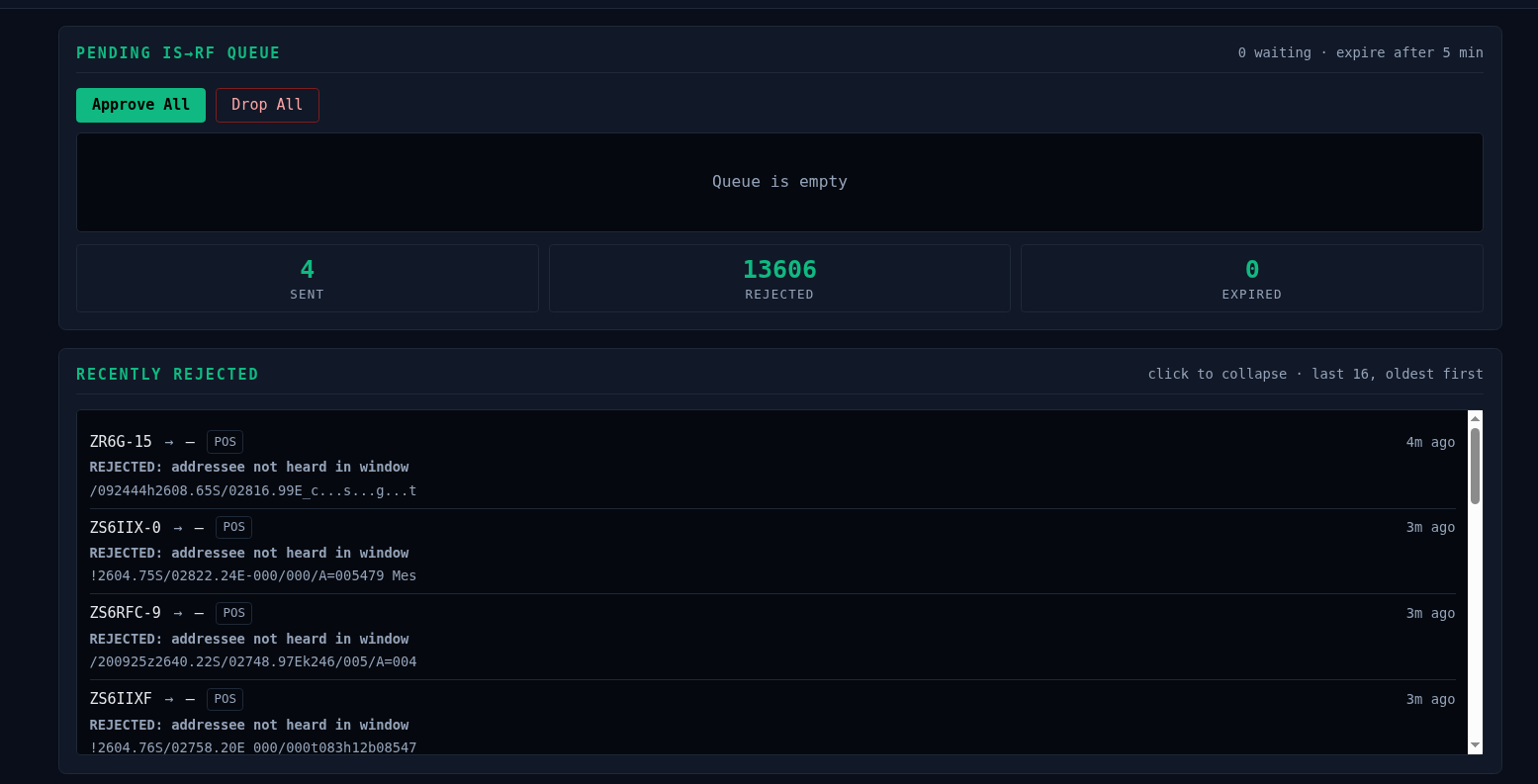
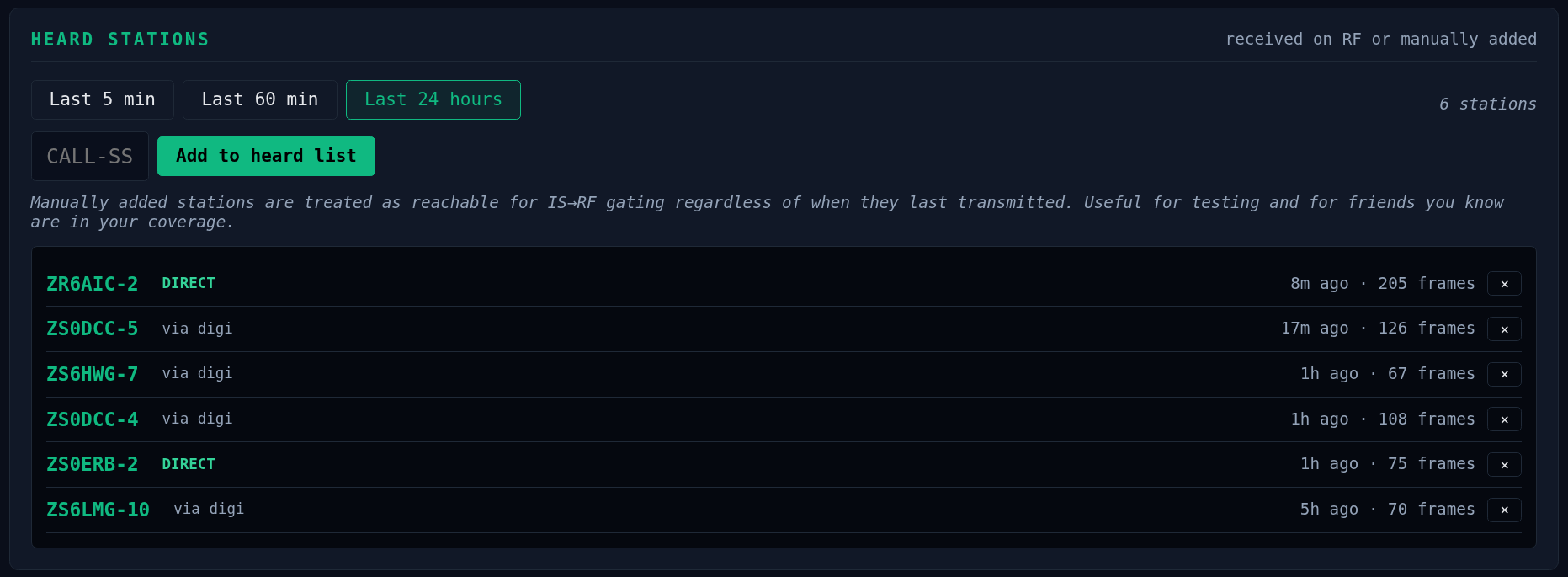
Packet Heard list (The list that will be used to send local APRS message)
Message 1 for Sending and receving message via web interface
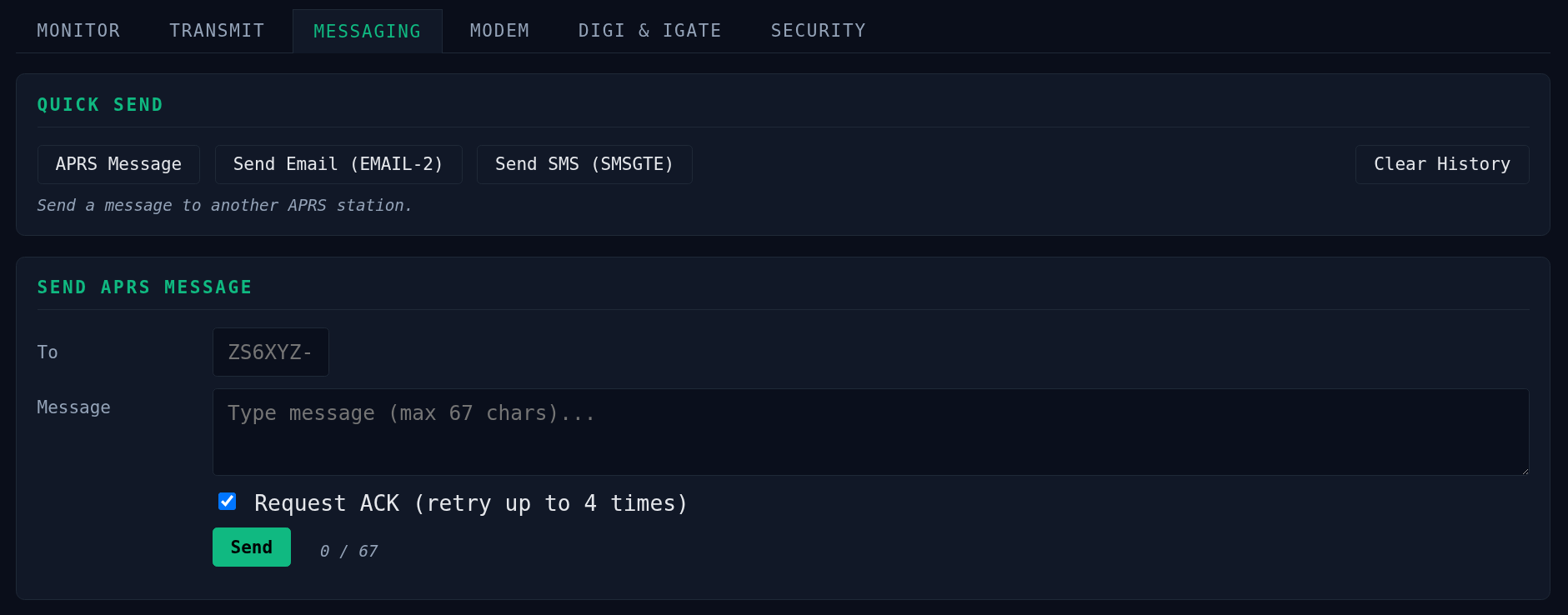
Message 2 for Sending and receving message via web interface
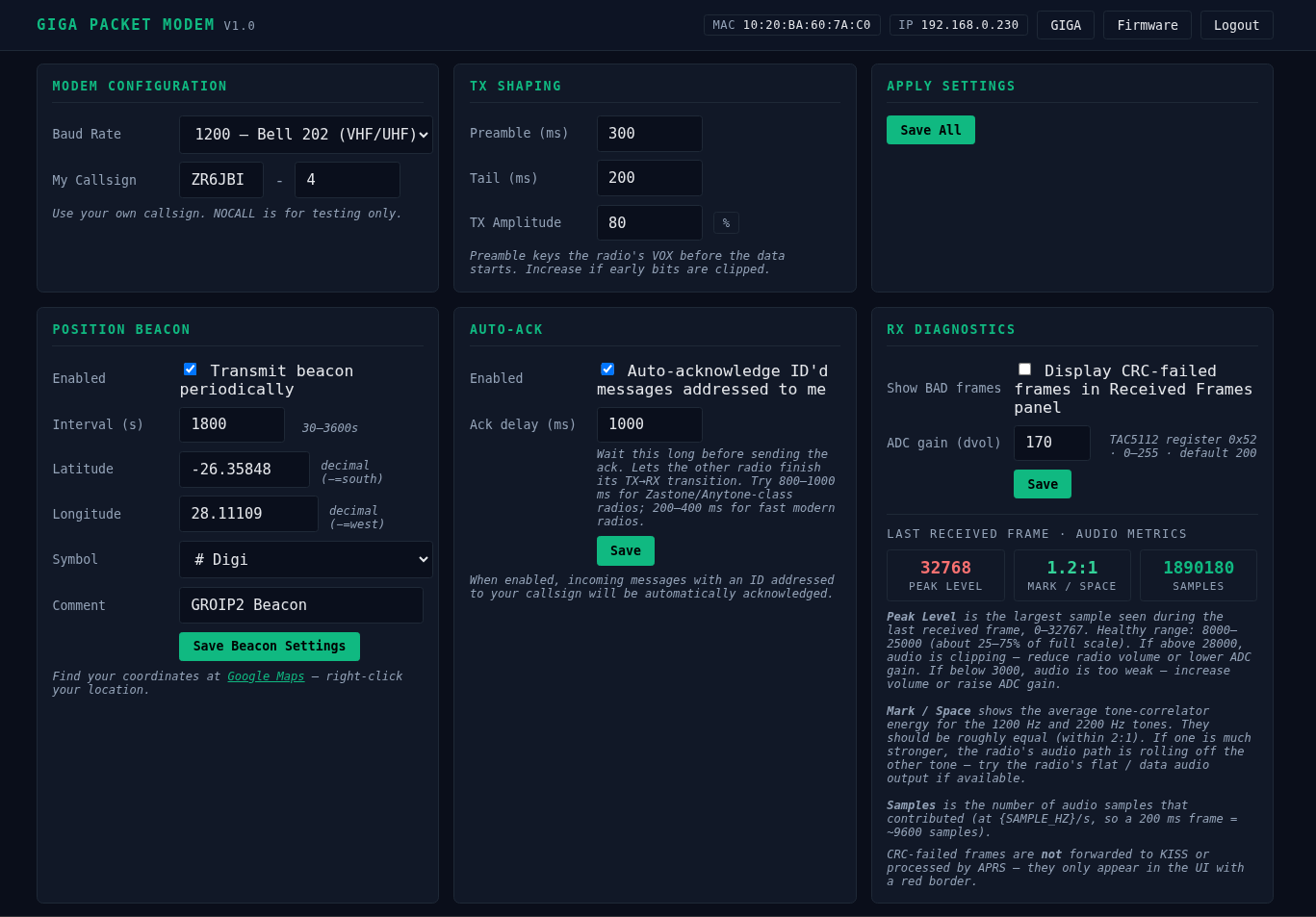
Modem config (Beacon shaping callsign, posission, Acknowledge, CRC)
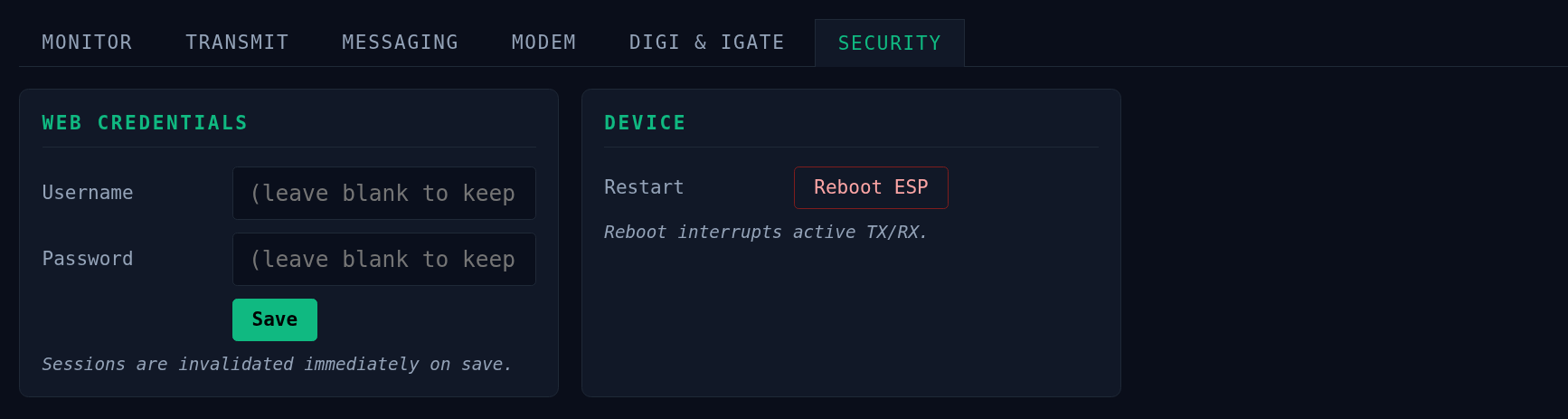
Security
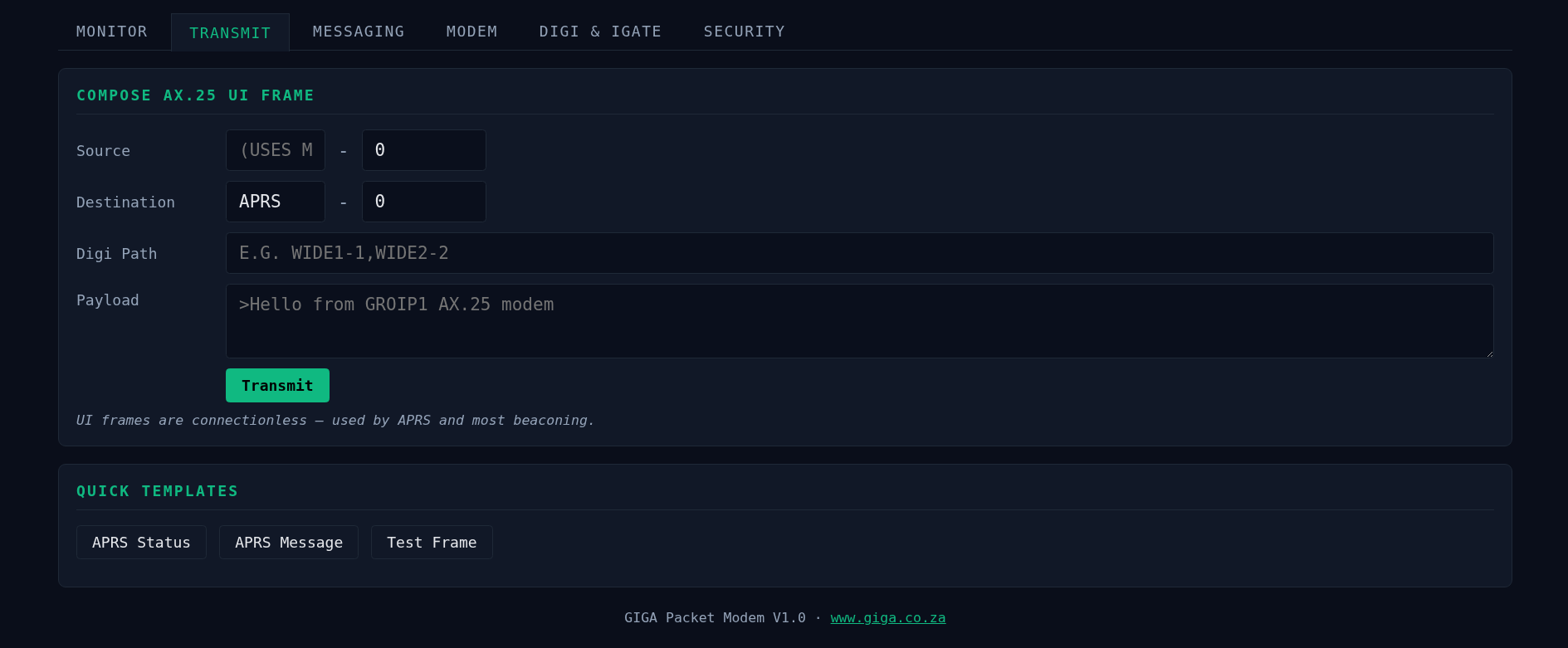
Transmiter a message with templates
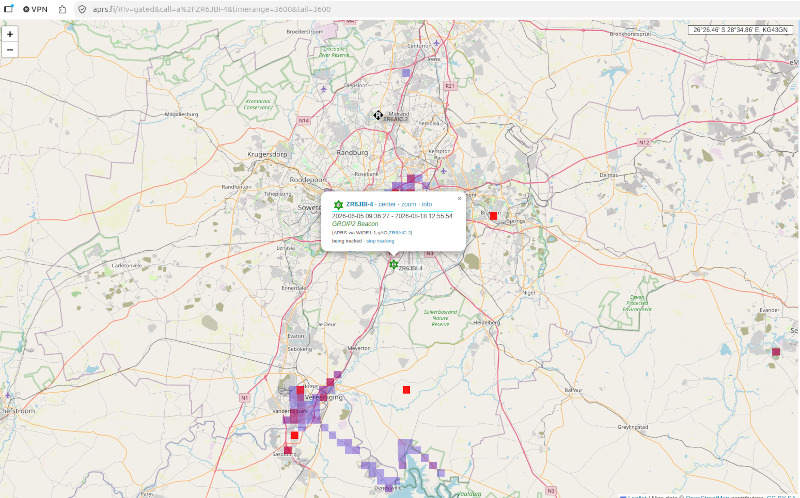
Igate view of packets transmited
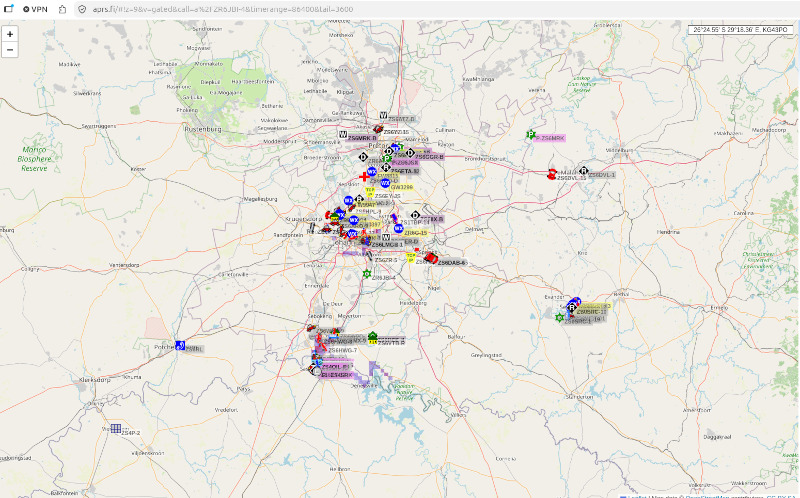
View of APRS tracked objects
Write a review
Your Name:Your Review: Note: HTML is not translated!
Rating: Bad Good
Enter the code in the box below:
Powered By OpenCart
Giga Technology © 2026
Giga Technology © 2026